It was early evening in the main plaza of Cochabamba; a group of kids were hip-hop battling, a blind girl was busking, a lady sold little packets of corn to feed the pigeons, there were people with Palestinian flags in vigil. I was by myself, but here I never feel alone.
I'd bought a Coke and a packet of chips and was connecting to the plaza’s free public WiFi... The next question I asked myself sent me down a rabbit hole; where did these ubiquitous privileges of daily life come from?
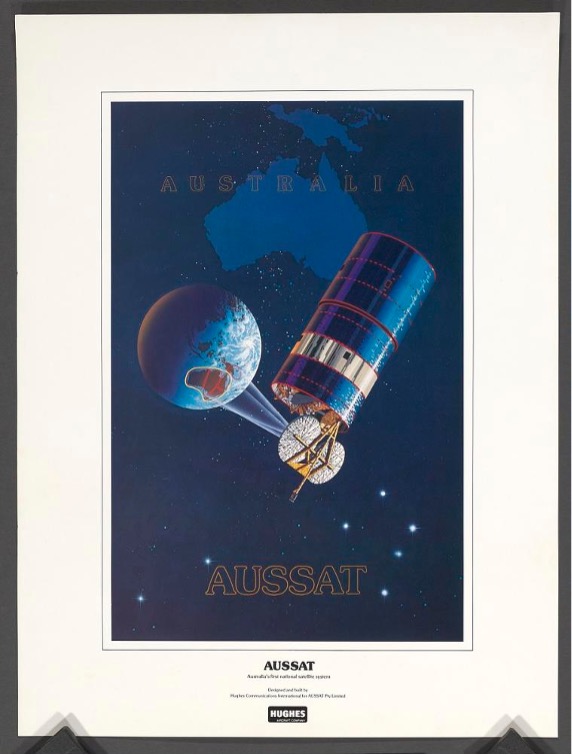
The WiFi came from Australia and the CSIRO Division of Radiophysics – just up the road from my childhood home. My dad introduced me to the CSIRO. He was an electrical engineer with Aussat and a member of the core team that launched Australia’s first satellites, and the CSIRO went on to design the Western Australia spot-beam antenna for Aussat’s second-generation B-series satellites. I remember in the late 80s visiting their lab at Marsfield and Aussat’s earth station at Belrose and being awed by those massive dishes pointing at the sky. After its work on satellite communications, that CSIRO lab is where in the 1990s, radio astronomers developed the signal-processing technology that made WiFi possible. That technology now sits in more than 15 billion devices around the world.
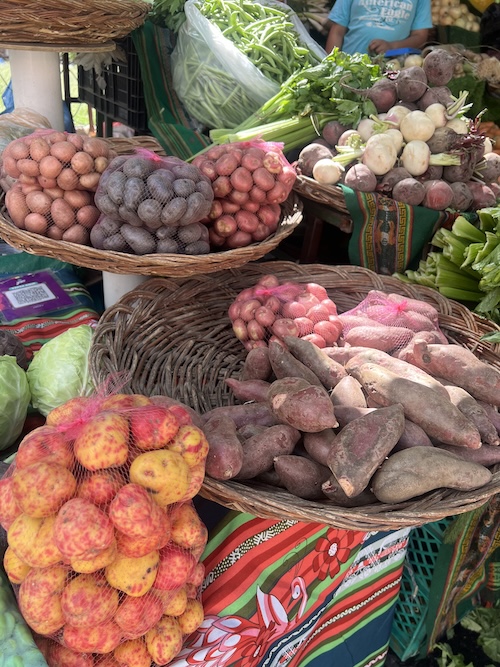
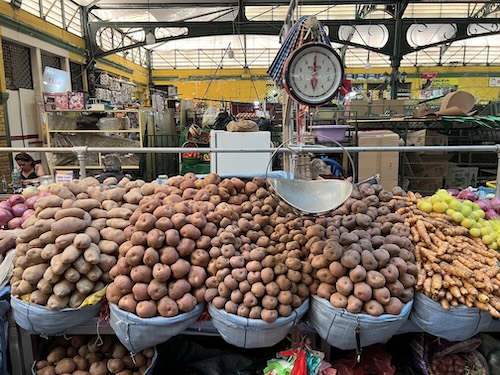
The potato was domesticated around ten thousand years ago, by the pre-Inca communities around Lake Titicaca. Living in Bolivia, among potatoes in colours and sizes I never imagined existed — from blue to red, yellow, orange or with pink spots – there’s a connection to the humble potato not felt elsewhere. Affectionately called the papita, it went out into the world and became one of the handful of plants that has fed civilisations.
Coca-Cola carries a third story. The coca leaf has been chewed by Bolivians for thousands of years. Sacred in the Andes, it grows in very specific locations; in Bolivia, the only two legal growing areas are the Yungas of La Paz and the tropics of Cochabamba. Chewing the coca leaf has a similar effect to having a cup of tea or coffee. As the name suggests, the coca leaf is widely reported to be an important ingredient in Coca-Cola, though the company has never publicly confirmed it. According to these accounts, the leaf is imported into the United States and processed by a single licensed company, which strips the cocaine for authorised medical use and supplies the flavour extract to Coca-Cola in Atlanta. Bizarrely, the coca leaf becomes a controlled narcotic when Bolivia tries to sell it to the world but remains a ‘trade secret’ in the world's most famous drink when an American corporation wants to use it. (The 1961 Single Convention classifies the leaf as a narcotic, which blocks Bolivia's exports, but its article 27 allows the de-cocainised leaf as a flavouring. That is why Coca-Cola can use it and Bolivia cannot sell it.)
My adopted home and my home of origin have each given the world things of immense value, but they’re not widely associated with either Australia or Bolivia, and neither country retains much of what they’re worth. Why is that? Who benefited?
This pattern extends to the majority of Australia and Bolivia’s natural resources whose economies depend on exploiting their underground resources. With a new resource boom around the corner, there’s a scramble to secure the next generation of essential minerals, and the United States is leading the charge. The extraction of natural resources is a well-known practice in Bolivia. The potato is the oldest version of a story that is repeating itself to this day. In the 1600s, silver poured out of the mountain at Potosí and financed the Spanish empire, leaving Bolivia among the poorest on the continent. During the first half of the 20th century Bolivia supplied around 20 per cent of the world's tin, and nearly 50 percent of it in 1945 during the second world war, making Simón Patiño one of the richest men on the planet, but he kept his wealth in banks in the US and Europe. Where the potato fed the world, it made fortunes elsewhere. Tin last century, gas this century. Lithium, shaping up to be the next. The commodity changes but the role doesn't. Bolivia is where the world's wealth begins, but where almost none of it stays.
In comparison, Australia — one of the richest countries on earth, Bolivia's opposite by many measures — is caught in a similar trap, but more out of choice than destiny. It is the world's largest exporter of iron ore and ships most of it unprocessed, is the world's largest producer of lithium and is in the top three for gas exports. It invented the WiFi signal and licensed it away. It ran a decade-long mining boom and saved almost none of the proceeds.
Andean communities engineered the potato by breeding wild, half-poisonous tubers into thousands of varieties tuned to grow in every altitude. They invented freeze-drying to store potatoes through winter and built terraces and water systems to grow them - one of humanity's few independent agricultural revolutions and the patient work of thousands of years. It wasn’t luck, it was intelligent engineering.
In 1994, researchers at a US university were granted a patent on a method of hybridising quinoa, developed from a variety collected near a village on Lake Titicaca, from seeds and knowledge Bolivian farmers had freely shared. The US researchers’ patent claim reached across dozens of traditional Andean varieties of quinoa. It was a familiar script and in the 2009 constitution, Bolivia nationalised the country's genetic resources to protect their own ingenuity. Bolivians have never needed the value of their resources explained to them. When the US patent reached across quinoa, the growers and their allies fought until it was dropped. When Bolivian president Gonzalo Sánchez de Lozada moved to export Bolivia’s gas through a Chilean port in 2003, the country rose against him, with the military killing more than fifty people before Sánchez de Lozada resigned and fled to the USA. In 2018, a US federal jury found him and his defence minister responsible for extrajudicial killings.
Through the first half of 2026, the roads were blockaded again. The Bolivian people audit the country’s resource deals with their bodies. They understand what the land holds, but what Bolivia has struggled to build are the institutions to protect its resources, so the defence doesn't have to be mounted in the streets, generation after generation.
The point is not that Bolivia or Australia lack capacity. Both countries have world-class, millennia-deep capacity — agricultural, genetic, and now, in the ground, mineral capacity on a scale the world's biggest powers are racing to secure. Why do both countries continue to sell or give away their resources for less than what they are worth?
In April 2026, Bolivia signed a critical-minerals memorandum with the United States – the text of that document has been kept from public eyes. The memorandum has not been published. One is left asking the question, who actually benefits from the terms being kept secret?