Data Ongoing investigation · Part two
Takenos Admits It. When Will You See Who You Are Paying?
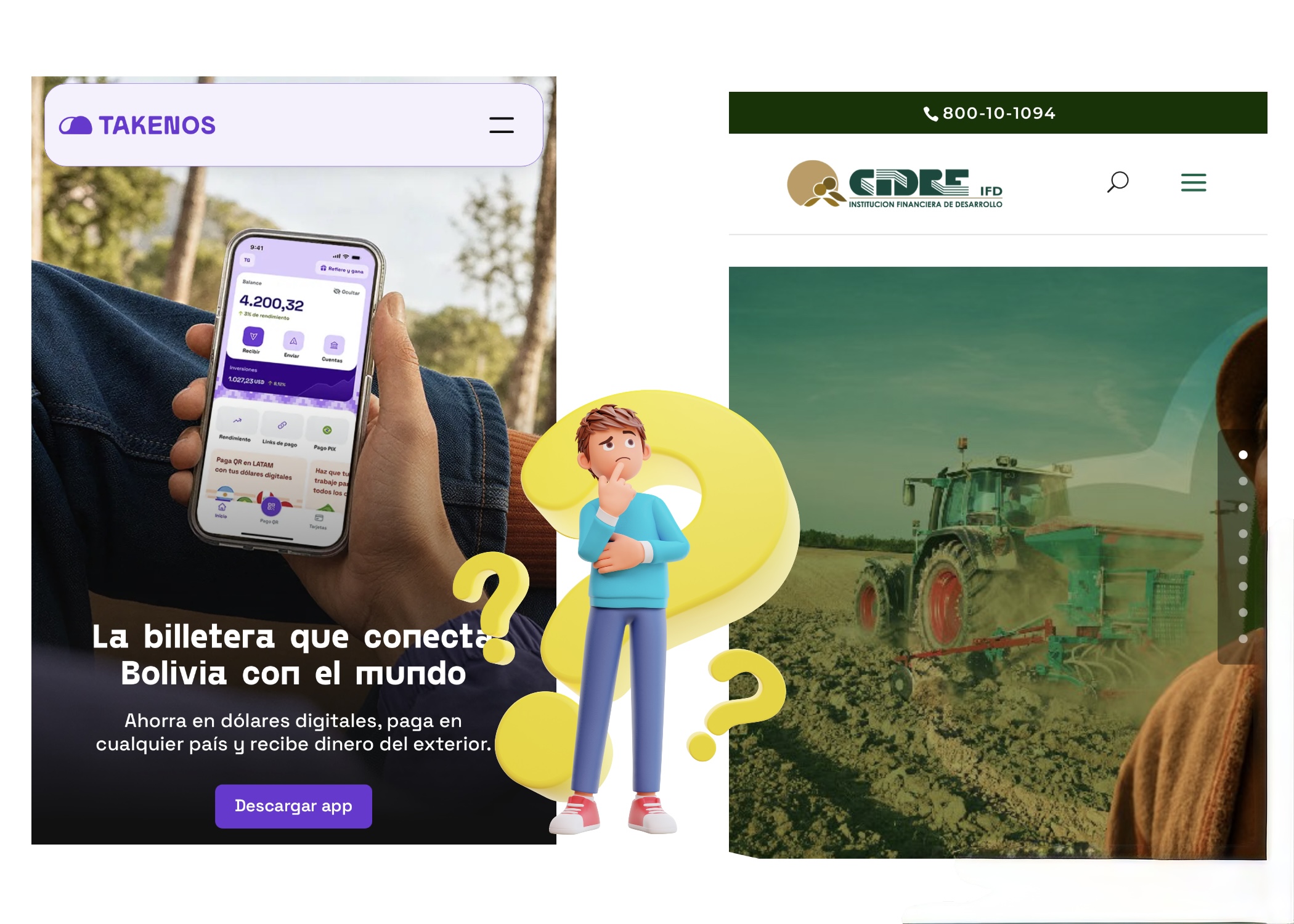
Eight days after the scam on my aunt, Takenos confirms in writing that the payment went into its collection account at CIDRE IFD and that payers cannot see the person who collects. It promises to show the name. It does not say when.
By Violeta Ayala — Tecnologa
This story follows A QR, Bs 2,900 and a Beneficiary Who Never Appears, about the scam that sent my aunt M's money to a Takenos QR.
In short
- Takenos confirms in writing that aunt M's payment went into "Takenos's collection account at CIDRE IFD".
- Takenos acknowledges that when someone scans its QRs, the payer sees that account's details. The end user's details stay off the screen.
- It says it is working to show the name of whoever collects. It gives no date.
- The scam QR is deactivated and the account that generated it is restricted. Takenos gave me the account holder's name. The balance and the transactions, it says, are released only under a court order.
- Takenos's gateway is CIDRE IFD, a non-profit association with a rural mission, funded by development organisations. CIDRE has not explained why it provides the service.
- Inversiones Tanqueray S.A., Takenos's company in Bolivia, does not appear on ASFI's lists of licensed entities or entities in the licensing process.
The reply
On 5 October, aunt M pays Bs 2,900 to a QR sent from aunt C's hacked WhatsApp. Her bank prints TAKENOS on the receipt. The name of whoever collected appears nowhere.
Eight days later, Takenos replies. On 13 October, a member of Takenos's Compliance team writes to me. They apologise for the delay and assign the claim to a person on their team.
About the number on aunt M's receipts, they write:
"It corresponds to Takenos's collection account at CIDRE IFD, the entity through which we operate QR payments in Bolivia. From that account, the funds are credited to the Takenos user who generated the QR."Takenos Compliance team, 13 October 2026
Then they confirm what the evidence in the first story shows:
"Today, when our QRs are scanned, the details of Takenos's collection account are shown, and not those of the end user."
Takenos says it understands why that information matters to the payer, and that it is already working on a technical integration so it appears in transactions. In other words, it is going to change its system. It gives no date.
When you pay a Takenos QR, your bank shows you Takenos's account. The person who collects stays off your screen.
The QR and the money
According to Takenos, the scam QR is now deactivated. The account that generated it is restricted and cannot receive payments.
Takenos does not say whether the Bs 2,900 is still in that account. In the same email it gives me the name of the account holder. It writes that it shares the balance, the transactions and the receiving account's details only under a court order. It says it has preserved all the account's information and will cooperate with the investigation once it receives that order.
It recommends filing a complaint with the police or the Public Prosecutor's Office and asking the authority to send it the order.
The money's path
With Takenos's reply, the path of the Bs 2,900 looks like this:
- Aunt M's bankAunt M pays the QR from her account at Banco Mercantil Santa Cruz. The receipt says TAKENOS.
- CIDRE IFDThe money enters Takenos's collection account at CIDRE IFD, a financial institution licensed by ASFI, Bolivia's financial regulator.
- TakenosTakenos credits the money to the user who generated the QR. According to its help centre, the bolivianos are converted into digital dollars and appear in the user's balance.
The account at CIDRE belongs to Takenos. The name of the person who collects stays inside Takenos. The payer's bank sees a brand.
A number that doesn't add up
Takenos calls the number on aunt M's receipt "the collection account". In the first story, the QR of a colleague with a Takenos account leads to a different number at CIDRE IFD.
I asked Takenos how many collection accounts it holds at CIDRE and whether each one receives payments for several users.
The gateway
Takenos collects bolivianos through CIDRE IFD. CIDRE has not yet explained why it provides that service.
What CIDRE is
CIDRE was founded in Cochabamba in 1981 as the Centro de Investigación y Desarrollo Regional, a regional research and development centre. It is a non-profit civil association, according to its 2023 annual report. In 2016 it obtained its ASFI licence as a development finance institution, according to its website.
It describes itself as specialised in rural development. According to its 2025 annual report, it has 27 permanent service points and serves clients in 224 municipalities.
CIDRE has no owners or shareholders. What it earns stays in the institution. It is governed by an Assembly of Members, which elects the board. The board is chaired by Álvaro Jaime Moscoso Blanco. The general manager is Mauricio J. Moscoso Guttentag.
Who lends to it
CIDRE runs mainly on borrowed money. At the end of 2023 it owed Bs 788.7 million to banks and financing institutions, and Bs 74.6 million to its depositors, according to its annual report.
Its funders include organisations with rural and social missions:
ABC Fund
The Agri-Business Capital Fund invested USD 4.7 million in CIDRE in September 2021 to expand its rural loan portfolio, according to the fund's press release. The fund was launched in 2019 with backing from IFAD, the UN's agricultural development fund. Its contributors are the European Commission, the Organisation of African, Caribbean and Pacific States, IFAD, Luxembourg and AGRA, according to IFAD.
Inter-American Development Bank
In March 2023, the IDB approved a non-reimbursable technical cooperation of USD 150,000 for irrigation lending to smallholder farmers adapting to climate change (BO-T1410). The project's tender listing identifies it with CIDRE.
Kiva
The US microlending organisation worked with CIDRE from 2009. USD 4.69 million in loans went through Kiva. On 24 September 2026, eleven days before the scam on aunt M, Kiva announced the end of the partnership. According to Kiva, CIDRE struggled to send it funds because of the dollar shortage in Bolivia, and Kiva received just under 70% of committed payments.
Banco de Desarrollo Productivo
CIDRE manages a loan portfolio for the BDP, Bolivia's state-owned second-tier development bank, according to its 2025 annual report. Through the BDP, the Central Bank channels funds to development finance institutions for micro and small borrowers.
All of them put money in so that credit reaches the countryside.
Its accounts
In the first half of 2026, CIDRE's operations lost Bs 66.9 million. An exchange-rate and value-maintenance adjustment of Bs 67.2 million covered that loss. The half closed with a profit of Bs 711,310, according to its financial statements as of 30 June.
Compared with the same half of 2025, its financial income fell from Bs 70.5 million to Bs 61.6 million. Charges for bad loans came to Bs 65 million.
In the 2025 annual report, the board chair writes that "new business lines were enabled" that year. He does not say which. He also says CIDRE created a committee to work on managing "liabilities abroad", which represented "a high-risk macroeconomic scenario".
What CIDRE needs to explain
Nothing indicates that CIDRE has done anything prohibited, or that it is responsible for the scam on aunt M. Its licence allows it to open accounts for companies. What is missing is an explanation.
A non-profit association with a rural mission, supervised by ASFI, is the gateway into the payment system for a digital-dollar wallet that does not appear on ASFI's lists.
These are the questions CIDRE needs to answer:
- How does the service to Takenos fit its rural development mission?
- Since when has CIDRE worked with Takenos? Are those accounts part of the "new business lines" of 2025?
- What does CIDRE charge Takenos? How much do the balances in its accounts add up to?
- What did CIDRE check about Takenos before opening its accounts? For example, its licence and its registration with the UIF, Bolivia's financial intelligence unit.
- Who identifies the people who collect through those accounts?
- Do its funders know that CIDRE operates Takenos's collection accounts?
The last question also goes to the ABC Fund, the IDB and the BDP.
The licence
CIDRE IFD appears on ASFI's list of development finance institutions with an operating licence.
Inversiones Tanqueray S.A. provides the Takenos service in Bolivia, according to Takenos's terms. I checked three lists published by ASFI:
- Supervised entities with an operating licence, as of 31 August 2026.
- Entities in the process of incorporation, as of 16 September 2026. It includes ten financial technology companies.
- Entities in the process of adaptation, as of 16 September 2026.
Inversiones Tanqueray S.A. appears on none of them. Neither does Takenos.
Takenos's terms say the company "operates through third parties that hold licences". CIDRE IFD is one of them. I asked Takenos under what authorisation it operates QR payments in Bolivia.
The claim, day by day
- 5 OctoberAunt M pays Bs 1,900 and Bs 1,000 to a QR that says Takenos.
- 7 OctoberWe report the case to Takenos with the QR, the receipts and the screenshots. Takenos opens a claim. That day, aunt M goes to Takenos's office in Santa Cruz to hand in a letter. According to her account, they do not accept it: they tell her to file a police complaint first. That night, the QR is still active.
- 8 OctoberThe QR is no longer active.
- 12 OctoberTakenos support writes that from its channel it cannot confirm whether the Bs 2,900 is still in the account that received it, whether it was withdrawn, or whether the QR was deactivated. There is no deadline for the review. About the company's contacts, it writes: "I don't have a press email or a verified official address in Bolivia to share with you." The channels it lists are the in-app chat, an Argentine WhatsApp number, Instagram and X.
- 13 OctoberTakenos's Compliance team replies. It confirms the collection account at CIDRE IFD, the deactivated QR and the restricted account. From that day on, according to Takenos, a person on its team handles the claim. I send seven questions.
Banco Mercantil Santa Cruz has until 14 October to reply to aunt M. [STATUS OF AUNT M'S POLICE COMPLAINT]
The questions
On 13 October I sent Takenos these questions:
- Does the account restriction also prevent withdrawing or transferring funds that were already in it?
- Do you have an estimated date for showing the end user's name? Will it appear before paying, on the receipt, or both?
- How many collection accounts does Takenos hold at CIDRE IFD? Does each one receive payments for several users?
- What identity verification do you require in Bolivia to open an account that collects with QR? Which authority supervises that process?
- Under what authorisation does Takenos operate QR payments in Bolivia?
- To which legal entity and which address should the Prosecutor's Office send the order?
- Where can a person file a written complaint with Takenos in Bolivia?
I will publish their answers when they arrive.
What I'm asking for
Takenos commits to showing the name of whoever collects. Payers will see who they are paying, as they already do when they pay a person with a bank account. The Central Bank's rule requires that name before and after each payment is confirmed.
Takenos does not say when. Meanwhile, every Takenos QR keeps collecting without showing the person who receives the money.
From Takenos, I ask for a date.
From ASFI and the Central Bank, I ask that they make it a rule for everyone. No QR should collect without showing the name of whoever receives the money. In the banks, in the wallets and in Takenos.
From CIDRE IFD, I ask for an explanation of why it operates Takenos's collection accounts and what controls it applies to them.
To you, until the name appears: a Takenos QR does not tell you who you are paying. If a relative asks you for money on WhatsApp, call them before you pay.
Whoever pays has the right to know where their money goes.
Did you pay a QR that said Takenos, and it was a scam? Don't let it go.
- Keep everything. The receipt, the QR and the chat screenshots. Don't delete anything.
- Report it to your bank and to Takenos. To Takenos, through the chat in its app. Ask both for a claim number.
- File a complaint with the police cybercrime unit (Felcc) or the Public Prosecutor's Office. Bring the receipts and the claim numbers. Takenos says it only releases the account's balance and transactions under a court order, so ask the prosecutor to send one to Takenos and to CIDRE IFD.
- If your bank doesn't respond, go to ASFI. You can take your complaint to the authority that supervises banks.
- Speak out publicly. Tell what happened on your social media. Cover your account number, your balance and other people's details.
- Send us your case at [email protected], with the date, the amount and what your receipt said. We won't publish your name without your permission.
How we did this story
Aunt M is my aunt. I am supporting her claim with Takenos. I told Takenos that I am a journalist at sala.red and that I would quote their replies.
Takenos gave me the name of the person who holds the account that generated the QR. I am not publishing it. I do not know whether that person carried out the scam, lent their account, or had their identity used by someone else. That information is for the Prosecutor's Office.
Takenos's replies arrived in writing, through the support chat and by email. I keep the screenshots. Quotes are translated from Spanish. What happened at the Santa Cruz office is told as aunt M recounts it. The ASFI lists were checked on 10 October 2026.
See the sources
- sala.red, A QR, Bs 2,900 and a Beneficiary Who Never Appears.
- Takenos, written replies from support, 12 October 2026, and from the Compliance team, 13 October 2026.
- ASFI, Entidades Supervisadas con Licencia de Funcionamiento al 31.08.2026.
- ASFI, Entidades en Proceso de Constitución al 16.09.2026.
- ASFI, Entidades en Proceso de Adecuación al 16.09.2026.
- ASFI, Instituciones Financieras de Desarrollo con licencia de funcionamiento, as of 30 September 2025.
- Takenos, Términos y Condiciones Takenos Business (Bolivia), 31 August 2026.
- Takenos, ¿Cómo puedo recibir Bolivianos en Bolivia?
- CIDRE IFD, Memoria 2023, Memoria Institucional 2025, financial statements as of 30 June 2026, Nosotros and Memorias y Gobierno Corporativo.
- Agri-Business Capital Fund, press release on the investment in CIDRE IFD, 2 September 2021, and IFAD, Agri-Business Capital (ABC) Fund.
- IDB, BO-T1410, and DevelopmentAid, BO-T1410 CIDRE IFD.
- Kiva, CIDRE, Bolivia, update of 24 September 2026.
- Banco Central de Bolivia, press release CP019/2025, 4 June 2025.