Ideas Comparative analysis
The loser cries fraud
La acusación de fraude no tiene ideología, y la única defensa es contar el papel y aceptar lo que diga.
By Violeta Ayala — Tecnologa Creativa
The loser cries fraud
Peru and Colombia count votes the same week. In both, the result splits down the middle and the side that is losing says the same thing. What distrust reveals, and what it hides.
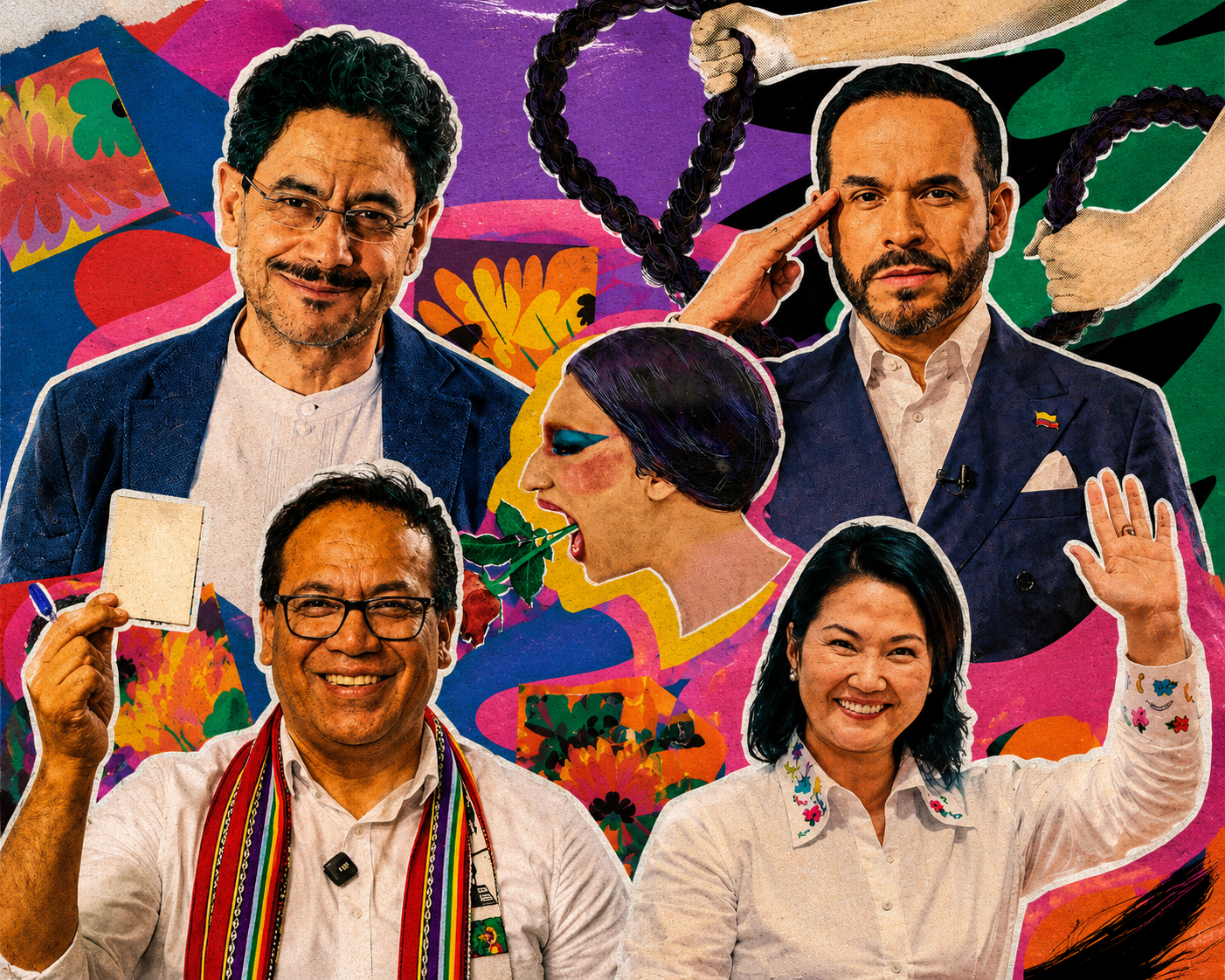
June 2026. Two Andean countries count votes at the same time. In Colombia, Abelardo de la Espriella leads Iván Cepeda by less than a point, around 245,000 ballots, with the official count still open. In Peru, Keiko Fujimori leads Roberto Sánchez by less than a point, around 40,000 ballots, with the count still open. Two elections split down the middle. Two results still being decided on paper. And in both, the side that is losing raises the same word: fraud.
In Colombia the accusation comes from the left. Gustavo Petro talks about vulnerable software, servers that changed addresses, tally sheets altered after upload. In Peru the accusation comes from Roberto Sánchez on the left, who questions the chain of custody of the overseas ballots. The symmetry looks ideological. It is not. To see it, go back five years.
01The reflex has no color
In 2021, in that same Peru, the one who cried fraud was the right. Keiko Fujimori lost to Pedro Castillo by 44,000 votes and mounted an unprecedented effort to reverse the result. She alleged systematic fraud, an international communist conspiracy, manipulation of tally sheets. She challenged more than 500,000 votes and asked to annul close to 200,000, almost all from poor Andean regions that voted overwhelmingly for Castillo. She hired Lima's most expensive law firms. She marched in the streets telling her followers the election would be turned around, following Trump's script against his own defeat.
None of those claims held. The OAS, the European Union, the civil association Transparencia, IDEA International, the Inter-American Union of Electoral Organizations, the National Jury of Elections and the Public Ministry reviewed what there was to review. In every evaluated case, the conclusion was the same: there was no fraud. Keiko held the accusation for months, into 2022, after every competent body had said no.
Five years later, the cry switches sides again. In 2026 the Peruvian left denounces irregularities in the chain of custody of the overseas tally sheets. And so does the far right: Rafael López Aliaga, eliminated in the first round, alleged fraud with no evidence, called his followers to insurgency, demanded the ONPE chief be arrested, and offered cash rewards to anyone who handed him proof. He offered money for proof because he had none.
Loses by 44,000. Alleges systematic fraud and a "communist conspiracy." OAS, EU, Transparencia, IDEA, JNE: no fraud found
Eliminated in the first round. Calls for insurgency, offers a reward for proof. No proof presented
Loses by ~40,000. Questions custody of the overseas tally sheets. Observation missions find no serious irregularities
Cepeda loses by less than a point. Alleges vulnerable software, changed IPs, altered tally sheets. ColombiaCheck and observers debunk the first-round version; count in progress
Now she wins by less than a point. Rejects the accusations against her: "no evidence." The same person, the other side
02The same person, both sides
Keiko Fujimori is the cleanest proof. In 2021 she lost by a razor-thin margin and saw fraud everywhere. In 2026 she wins by an almost identical margin, with the same system and the same bodies, and now she calls her rival's complaints a desperate political act with no evidence. She asks the authorities to hurry the count and proclaim fast. Everything changed except one thing: this time she is winning.
The margin is the same. The system is the same. The conduct flips completely depending on which side of the line it lands. When the fraud accusation shows up only when she loses and disappears when she wins, the accusation was never looking at the evidence. It was looking at the scoreboard.
03What is true
Here is the hard part, the one polarization will not let you hold. The systems do have real flaws. Both things are true at once.
In Peru, the head of the National Jury of Elections admitted there were serious irregularities in the organization of the vote: delays, logistical problems opening polling places. That is real, and it is different from the counting fraud being alleged. Peru has had eight presidents in a decade. Castillo is in prison. The current president is interim, sworn in February after his predecessor fell over secret meetings with Chinese businessmen, and he hands over power on July 28. The 2026 election broke the twenty-year record for null votes: a population so estranged from the system that it spoils the ballot on purpose.
Colombia has its own cracks, and we have documented them: the opacity of the transmission software, the degraded traceability of the E-14 forms, a vendor nobody audits in depth, a 2018 Council of State ruling still in dispute. None of that is invented. And none of it proves the specific fraud being alleged.
In the Andes we call this ch'ixi: two truths that do not dissolve into one. The system needs reform and the fraud claim is false. Holding only the first is naivety. Holding only the second is propaganda. Holding both is the work.
04The paper holds
Both democracies rest on the same thing: physical paper anyone can look at. In Colombia the count that counts is the E-14, filled by hand at the table, signed, photographed by witnesses, consolidated by judges with every party watching. In Peru the observed tally sheets go to Special Electoral Juries that recount the physical ballots kept in sealed envelopes, broadcast live.
In 2026 Peru added a rule: the ballots are kept until proclamation, no longer destroyed once the tally sheet is filled. That change is the system answering its own critics with more transparency. The technical defense against fraud exists and it works. It is evidence anchored in paper that anyone can observe. Whoever claims a tally sheet was changed has a way to prove it: the signed original against the published one, table by table.
05But the paper is not enough
Technology solves the technical problem. It does not solve the other one. When the OAS, the EU, Transparencia and IDEA all say there was no fraud, and the accusation lives on anyway for years, the accusation was never listening to the evidence. Distrust that no proof can move is not an analysis. It is an identity.
What separates a legitimate audit from a delegitimization is whether you accept the answer. Asking for a recount is democratic. Asking that doubtful tally sheets be reviewed is democratic. Announcing the theft before the count, and keeping the accusation after the verification, is something else. It teaches half a population that defeat does not exist, that only robbery does.
06The cost
Peru is the mirror of where this leads. A self-coup, streets with dead protesters, presidents falling one after another, a country where no institution keeps its trust and a losing candidate calls for insurgency instead of conceding. The fraud narrative does not dispute one result. It dissolves the one thing that lets a divided country keep living together: the loser's word that the result stands.
That word is the wall holding up everything else. Colombia, with its result still in the count and the delegitimization already circulating online, is deciding right now whether to keep that wall or borrow Peru's ruins.
Counting the paper in full view, and accepting what it says, is the only thing that holds up a democracy split down the middle. Everything else teaches half a country that losing is the same as being robbed. And a country that believes that never trusts anything again.