Cables Lithium
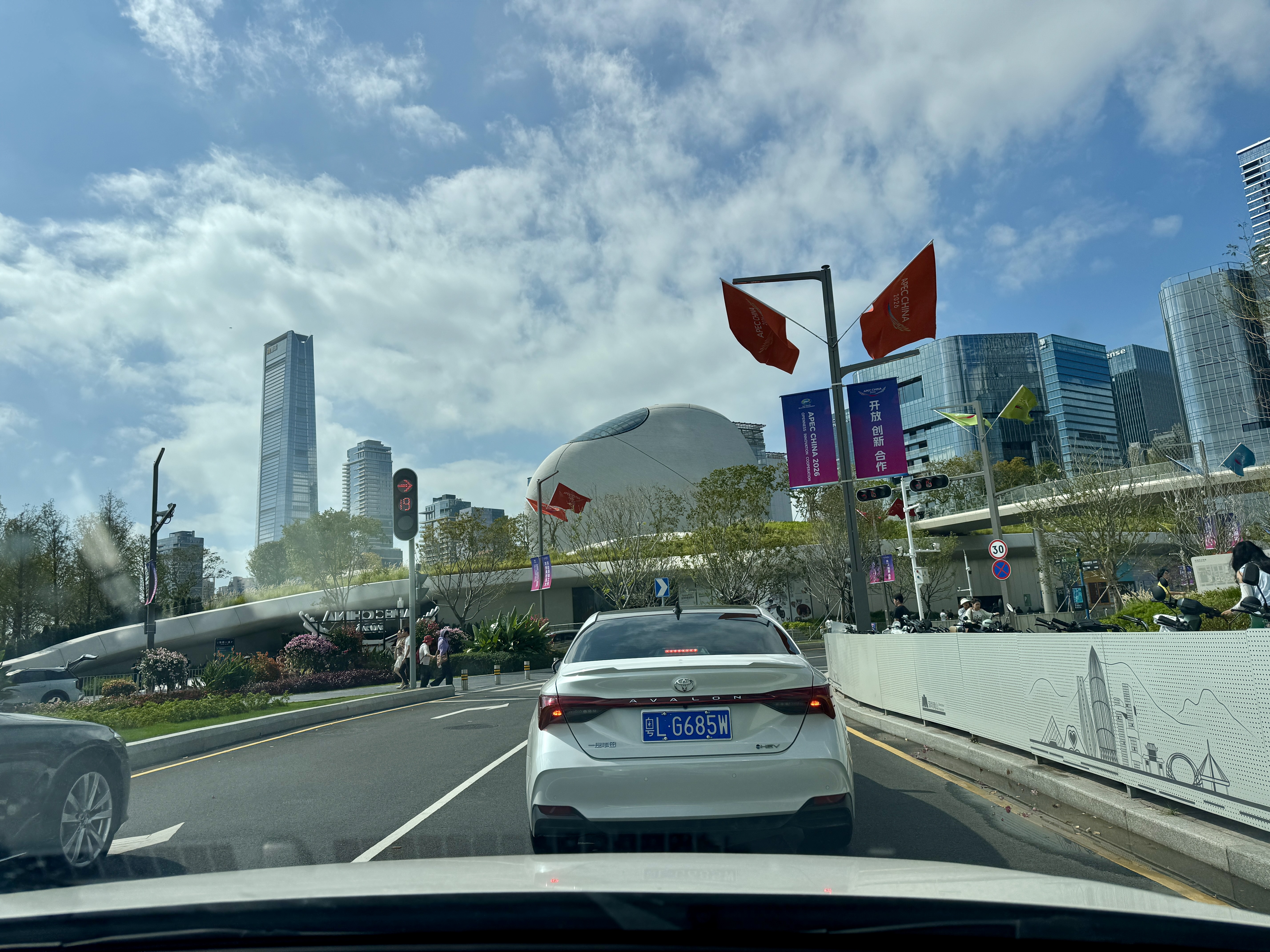
I counted the cars in Shenzhen. All of them were electric.
Lithium stores electricity and lets it travel. China refines 75% of it, makes the batteries and generates a third of the world's electricity. Bolivia has the salt flat.
By Violeta Ayala — Tecnóloga Creativa
On 7 November I was in Shenzhen. I started counting the electric cars. It was all of them.
Buses, taxis, ride-hailing cars. Shenzhen swaps them all for electric ones and is the first city in China to do it. In 2024, 77% of new cars sold there are new-energy vehicles. Across China the rate is 48%. BYD is born in that city.
Each of those cars carries lithium inside. That lithium comes out of a salt flat or a rock, out of a place where somebody signed something.
What is lithium?
Lithium is one of the first. It appears in the first minutes of the universe, alongside hydrogen and helium. It is the lightest metal there is.
In 1817 a Swedish chemist, Johan August Arfwedson, finds it inside a stone. They name it lithium after lithos, Greek for stone.
Then it enters the pharmacy. 7Up carries it in its formula until 1948. That same year an Australian psychiatrist, John Cade, starts using it to treat mania. It is still prescribed. In the Cold War it enters the hydrogen bomb. In 1991 Sony puts it in a rechargeable battery. We have told that story.
The same metal calms a mind, arms a bomb and lights up a phone.
What does it mean?
Lithium stores electricity and lets it travel. It is stored motion.
Look at your phone. It has lithium. The laptop has lithium. The drone, the scooter, the bus in Shenzhen. The International Energy Agency says electric cars and storage batteries now consume more lithium than all pocket electronics.
A city with batteries moves without oil. A country with lithium has something the city needs.
And the other minerals?
Lithium travels in company. A typical electric car needs six times the minerals of a combustion car. Copper for the cables. Nickel, cobalt, manganese and graphite for the battery. Rare earths for the motor magnets.
The United States keeps a list of 60 minerals it calls critical. Critical is a buyer's word. A mineral joins the list when the economy or defence needs it and the supply can fail. The sala.red map locates 47 of those 60 in Bolivian territory.
The list is written in Washington. The stones are here. The Constitution says natural resources belong to the Bolivian people.
And Nvidia's chips?
The cloud has ground under it too.
A chip is a sliver of silicon with billions of tiny switches. Nvidia's chips run millions of small sums at the same time. That is how artificial intelligence is trained and used. Nvidia designs them. Almost all are made in Taiwan, in TSMC's plants.
Making them takes gallium and germanium for the circuitry, copper for the cabling and rare earths for the fans. China produces close to 98% of the world's primary gallium. The United States imports all the gallium and all the germanium it uses.
The chip carries no lithium. The lithium sits next to it, in the batteries that store the electricity. Data centres already use 1.5% of the planet's electricity. That bill is also paid in water.
Artificial intelligence is made with stones.
Who has the electricity?
In 2025 the world generates 31,734 terawatt-hours of electricity. China generates 10,578, a third. The United States generates 4,520, 14%.
More than half of the solar power the world adds that year is installed in China. Sun and wind are now 22% of its electricity.
The sun does not store itself. It is stored in batteries. Lithium iron phosphate batteries hold more than 90% of the storage market. China makes 98% of their cathode material.
Where does it start and where does it end?
The chain starts in a salt flat and ends in a street.
The US Geological Survey (USGS) counts lithium resources in February 2026. Argentina holds 28 million tonnes. Bolivia holds 23 million. Chile holds 13 million. China refines 75% of the world's lithium. Shenzhen builds the cars.
The USGS country page for Bolivia notes something else: the country has no identified reserves. A resource is what sits in the ground. A reserve is what can be extracted at a profit today.
Bolivia knows this shape. The silver leaves Potosí. The tin leaves Llallagua. The factories stay somewhere else. From tin to lithium, the route looks alike.
What does the United States want it for?
The United States has a single operation producing lithium, in Nevada. It imports more than half of the lithium it uses.
On 4 February 2026, in Washington, Vice President JD Vance proposes to more than 50 countries a preferential trade zone for critical minerals with price floors. Marco Rubio says there that the minerals are concentrated in the hands of one country and that this is a tool of leverage. He does not name China. Reuters writes that the plan is aimed at countering China.
In October 2026, a paper from the Perry Center, part of the US National Defense University, focuses on Bolivia's lithium and antimony because of China's control over those supply chains. It expresses its author's views.
In Bolivia there is already a signed contract with a Chinese consortium, CBC, led by CATL, for two lithium carbonate plants. It waits in the Assembly.
With Bolivian lithium the United States can do two things: use it, or decide who uses it. The critical minerals memoranda that can be read speak of both. They give priority to US investment and they review who mining assets are sold to.
China refines the lithium, makes the batteries and generates a third of the world's electricity.
The United States has a list of 60 minerals. Bolivia has 47.
Between the salt flat and the street there is a piece of paper. Bolivia signs it with the United States on 27 April 2026. The text is not public. sala.red asks Washington for it. That is another story.
In Shenzhen the cars are already on the road.
How this story was made
The car count in Shenzhen is the author's personal observation, made on 7 November 2026, with no statistical method. The figures come from the sources listed below. The electricity figures are for electricity generation, not for all energy. The Perry Center paper expresses its author's views and not those of the US government.
Sources
- Carbon Brief, explainer on the Shenzhen model: carbonbrief.org
- Linda Hall Library, on Johan August Arfwedson and the 1817 discovery: lindahall.org
- Wordorigins, on the origin of lithium and of its name: wordorigins.org
- University of Toledo, lithium page, on 7Up and medical use: utoledo.edu
- Timeline of lithium, on John Cade in 1948: timelines.issarice.com
- sala.red, Lithium: the metal that left the pharmacy to move the world: sala.red
- International Energy Agency, The Role of Critical Minerals in Clean Energy Transitions: iea.org
- International Energy Agency, Global Critical Minerals Outlook 2026: iea.org
- sala.red, Bolivia's critical minerals, part 2: sala.red
- Political Constitution of the State, Article 349.
- IMF, Finance and Development, December 2025, Inside the AI-Led Resource Race: imf.org
- FP Analytics, October 2025, on gallium: foreignpolicy.com
- USGS, key minerals in data centres: usgs.gov
- sala.red, H2O and AI: sala.red
- Ember, Global Electricity Review 2026: ember-energy.org
- Pew Research Center, with Ember data, 2025 electricity generation by country: pewresearch.org
- US Geological Survey, Mineral Commodity Summaries 2026, lithium: pubs.usgs.gov
- US Geological Survey, Bolivia country page: usgs.gov
- sala.red, From tin to lithium, the same decree: sala.red
- Reuters, 4 February 2026, on the Critical Minerals Ministerial: kathmandupost.com
- Perry Center, Critical Minerals in Bolivia, October 2026: wjpcenter.org
- US-Malaysia memorandum, official text, 26 October 2025: govinfo.gov
- State Department, post on X on the signing of the memorandum with Bolivia, 27 April 2026: x.com/EconAtState